How to Write Strong Character Descriptions
I recently discussed building character descriptions with a writer who was concerned with relying too heavily on physical features to bring their characters to life. They did not want to use full lips, sharp jawline, or anything common and felt limited about their options. In addition, they hoped to minimize physical description to avoid objectifying the love interest.
Let's realize the ultimate goal is to have our readers connect with and recognize the characters and their voices as they progress through the story. To move toward that, we can first consider how we relate to, describe, and picture the characters from our favorite stories. For me, that connection comes through their core beliefs and personality. And, as long as it is in my imagination, their physical features match my aesthetic.
While there is space, through world-building, to lead the reader to envision our characters as we see them, for text-based novels, we want to engage their imagination to see them, themselves. (When a graphic illustration or cover image is included, they will, most likely, use that reference as a base to build their visuals.)
I want to share an example of how an author capitalizes on physical descriptions by combining emotional expressions and movement within the scene to communicate the character traits.
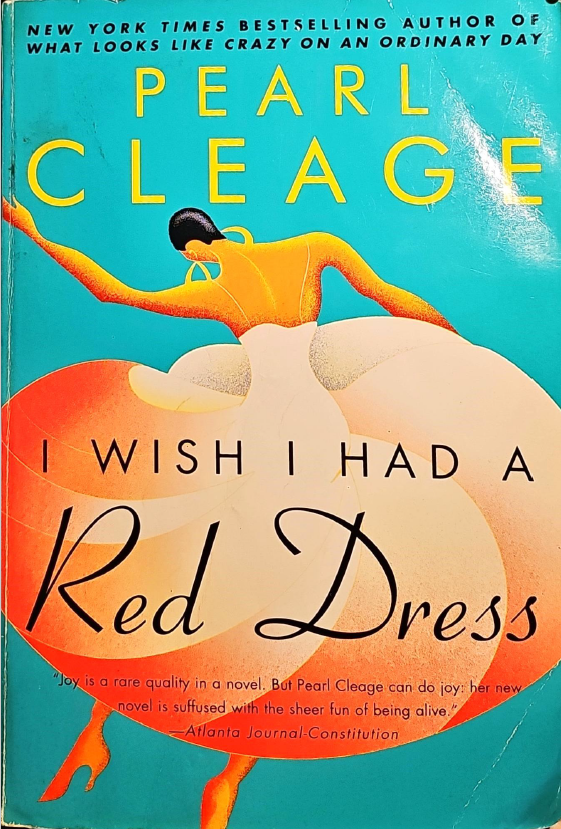
In I Wish I Had a Red Dress, Cleage uses physical descriptions paired with expressive behavior so the reader can clearly picture the character. She layers their actions within the scene to reveal personality and keep the story moving. This approach can also offer insight into what a character is feeling, even when it is at odds with their dialogue, sometimes hinting at mixed emotions and hidden agendas.
Below is a series of sample text from chapter nineteen titled “time is money.”
(The sample is written consecutively within the story, but the ellipses indicate non-sequential portions quoted.)
Seated next to her [Anita] in the front seat was a woman probably ten years younger, but already showing the ravages of too many bad drugs, too much mean sex and a steady diet of barbecue potato chips, fried pork rinds and Pepsi-Cola. The passenger was talking animatedly on a tiny cell phone, but Anita leaned across her, opened the door, stuffed some money into her hand and pushed her out into the cold afternoon to pump gas.
The woman, dressed in a red miniskirt and a short fake fur jacker did not appreciate the division of labor. "Why I always gotta pump the damn gas?" she said, shivering and trying in vain to pull her skirt down over a litter more of her thighs. "One, because you ain't got no damn car. Two, because you ain't got no damn money," Anita snarled through the open door. "And three, because you can always walk your broke ass home if you don't like it.
…
Anita slammed the door, leaving her friend outside, and lit a cigarette. The woman, having no other options, sighed deeply and set about her task while resuming her phone conversation at the same decibel level she'd used speaking to Anita.
…
I don't even think she was conscious of me being there. Between pumping gas, rolling her eyes at Anita through the windshield…she was fully engaged in her own moment…watching the meter carefully so she wouldn’t go over the amount…
…
The woman cracked at the response I couldn't hear and replaced the pump. Five dollars on the nose. Her laugh had a raspy, desperate quality that held no hint of real amusement.
Cleage shows the reader how the character thinks, feels, and is viewed, without explicitly telling them. Physical description and layered expressive behavior work together to help the reader picture your characters. And if you haven't read this book, do yourself a favor. Pick it up.